
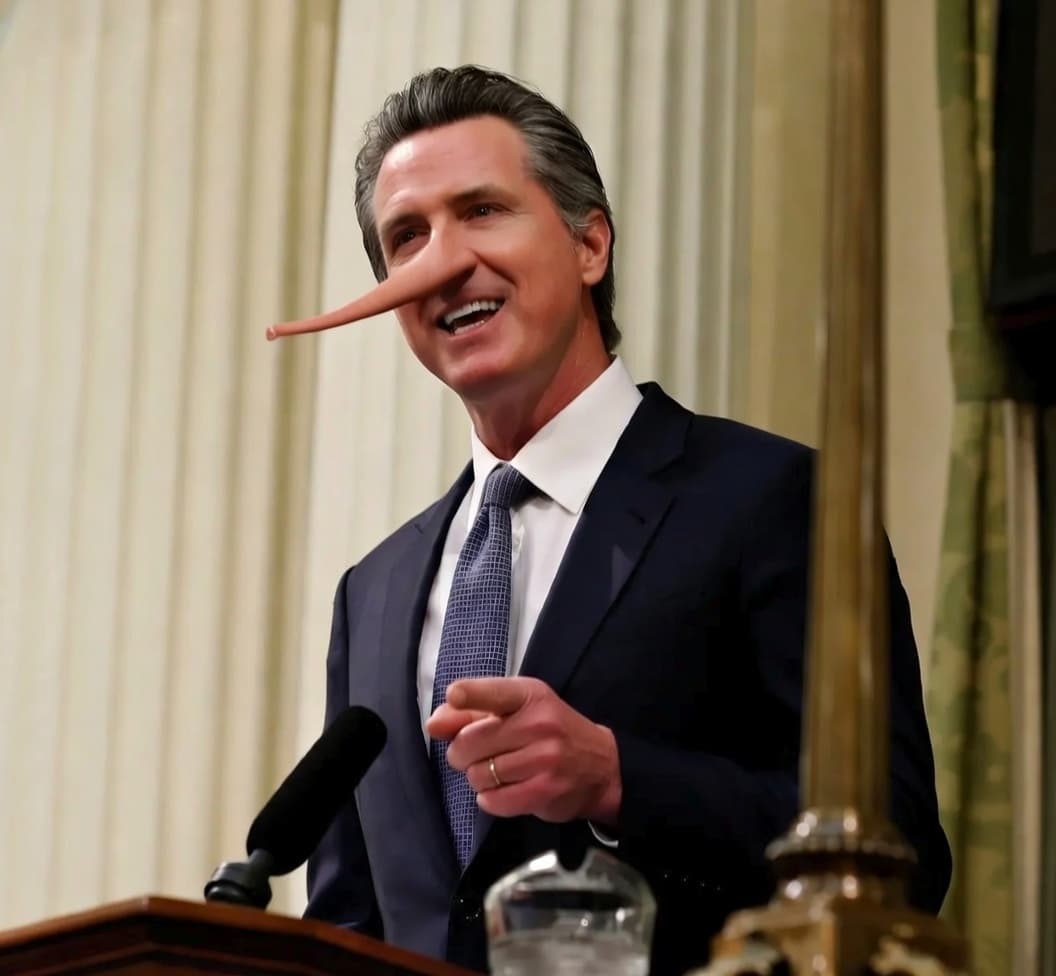
As Governor Gavin Newsom delivered his capstone 2026 State of the State address on January 8, he painted California as a resilient powerhouse—a global leader in innovation, education, and progressive policies standing firm against federal headwinds. The speech was heavy on historical anecdotes, economic boasts, and calls for unity, positioning the Golden State as a model for the nation. However, beneath the optimism lies a disconnect: many of the touted achievements gloss over persistent challenges, while key issues, such as fiscal instability and resident flight, remain unaddressed. Let's unpack the address, cross-referencing claims with data, and highlight where the rhetoric falls short of the facts.
Economic Claims: Fourth-Largest Economy or Slipping Behind?
Newsom proudly declared California the world's fourth-largest economy, valued at over $4 trillion, emphasizing its dominance in tech, research, and development. This echoes data from early 2025, when California's nominal GDP hit $4.1 trillion, briefly overtaking Japan. However, by mid-2025, fluctuations in currency and global rebounds pushed the state back to fifth place, with GDP at $4.215 trillion compared to Japan's $4.28 trillion. Recent estimates peg it at $4.048 trillion for 2024, still massive but underscoring volatility.
While growth outpaced the U.S. average at 6% in 2024, the speech sidesteps underlying weaknesses. Unemployment hovered at 5.5% in July 2025—the highest among states, tying for 50th place—and is projected to peak at 6.1% this year before easing slightly. Job creation has been feeble, softened by AI disruptions, and while sectors like information ($538 billion GDP share) and real estate ($460 billion) thrive, the state ranks 47th in economic outlook per the Rich States, Poor States index, reflecting burdensome regulations and taxes that stifle broader prosperity. If the goal is sustainable growth for all, ignoring these drags feels like prioritizing headlines over hard fixes.
Budget Omissions: Celebrating Surpluses While Ignoring the Red Ink
Newsom highlights a $248.3 billion General Fund budget, higher-than-forecast revenues of $42.3 billion, rebuilt reserves ($7.3 billion), and pension paydowns ($11.8 billion over years). He credits population growth for economic windfalls, claiming the state is thriving. Yet, this section conspicuously avoids the elephant in the room: California's looming fiscal shortfall.
The governor's own 2026-27 budget proposal, released shortly after, admits a "modest" $2.9 billion deficit for the upcoming year, ballooning to $22 billion in 2027-28 without reforms. This contrasts with the nonpartisan Legislative Analyst's Office's earlier $18 billion projection, a gap driven by optimistic assumptions about AI-fueled stock revenues. Total spending hits $348.9 billion, with $23 billion in reserves providing a buffer—but risks from federal policy changes, like potential cuts to Medi-Cal and food aid, could exacerbate imbalances.
This restraint is prudent, but the speech's focus on past surpluses without addressing out-year deficits suggests a reluctance to confront the consequences of expansive spending. Revenue volatility, tied to capital gains (spiking to 11.6% of personal income in 2021 before dropping to 4.1% in 2023), underscores the need for belt-tightening over perpetual optimism. Families facing rising costs deserve transparency, not selective storytelling.
Population and Exodus: Minimal Growth Masking a Mass Departure
Newsom asserts California's population is growing, framing it as a boon. Technically true—the state added 19,200 residents in 2025, a 0.05% uptick to 39.5 million—but this anemic figure hides a troubling trend. Net domestic out-migration reached 216,000 in 2025, with more Californians leaving than arriving from other states. International immigration (126,000) offset much of this, but overall migration remains negative at -62,600 for 2023-24.
U-Haul's 2025 Growth Index ranks California dead last for the sixth year, with the highest net loss of one-way movers, driven by affordability woes—housing costs 57.8% above the national average. Birth rates near record lows and rising deaths (projected to exceed births by 2039) compound the issue. The speech celebrates "happiest cities" like Fremont and San Jose, but ignores how high living expenses—gas, utilities, taxes—push families out to states like Texas, Arizona, and Nevada.
Worse, businesses are following suit. In 2025, 3% of firms relocated out, with giants like Chevron (HQ to Houston), Tesla, and In-N-Out eyeing Tennessee. The recently enacted 5% wealth tax on billionaires (effective Jan. 1, 2026) has dramatically accelerated this billionaire exodus, with at least six high-profile figures—including Google co-founder Larry Page, Oracle's Larry Ellison, and PayPal's Peter Thiel—cutting ties with the state before the deadline to avoid the levy. Financial advisors to the ultra-wealthy predict another 15 to 20 billionaire families could depart if the measure is fully implemented, representing a significant chunk of California's roughly 200 billionaires.
This one-time tax, imposed on worldwide assets exceeding $1 billion and payable over five years (effectively 1% annually), was pitched to raise about $100 billion for healthcare, education, and food assistance amid a projected $190 billion Medi-Cal shortfall. Yet, critics warn it could backfire spectacularly. Venture capitalist Chamath Palihapitiya claims $500 billion to $1 trillion in collective wealth has already fled, exacerbating budget deficits rather than alleviating them. The state's Legislative Analyst's Office estimates that while initial revenues might hit tens of billions, long-term losses could reach hundreds of millions annually in income taxes as these top earners relocate.
Beyond revenue erosion, the tax threatens California's innovation engine. By targeting unrealized gains—wealth tied up in stocks and businesses—it could force premature asset sales, disrupt markets, and deter risk-taking in startups. Tech leaders argue it risks "destroying the Silicon Valley startup ecosystem," as founders and investors shift to low-tax states like Texas and Florida, taking jobs, philanthropy, and economic activity with them. Historical precedents from France and Sweden, where similar wealth taxes prompted capital flight and minimal revenue gains, suggest California could face the same pitfalls. With billionaires already mobilizing for litigation and more departures looming, this policy exemplifies how aggressive taxation might hollow out the very tax base it seeks to tap.
Broader Gaps: Crime, Homelessness, and Unmet Promises
The address touts drops in crime and homelessness, but these are partial wins amid ongoing struggles. Violent crime fell 12.1% in major cities, yet statewide rises in prior years temper the victory. Homelessness dipped 9% unsheltered, but national increases highlight California's outlier status. Education gains are noted, but over half of students still fail basic standards, and chronic absenteeism persists.
Reactions on X echo this skepticism: Critics called it a "victory lap" ignoring soaring costs and crime, with one post dubbing it a "State of the Narrative" over reality. Another highlighted muted applause, questioning if California is truly better for families and businesses.
Time for Real Accountability
Newsom's speech inspires with visions of ingenuity and resilience, but it risks complacency by downplaying systemic issues. California's strengths—innovation hubs, clean energy progress—are real, yet they're undermined by policies that inflate costs, deter investment, and drive away talent. Sustainable progress demands fiscal discipline, lighter regulatory burdens, and priorities that empower individuals over expansive government programs. As the state navigates federal uncertainties, focusing on these fundamentals could rebuild trust and reverse the exodus. Otherwise, the "beacon" risks flickering out.