
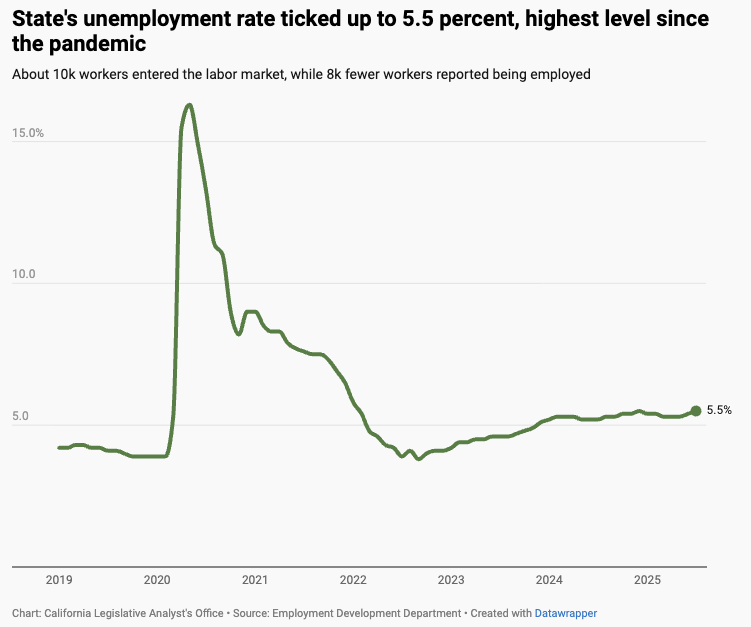
In the land of endless summer and Silicon Valley dreams, California stands as a beacon of economic might, often touted as the fourth largest economy in the world. But scratch beneath the surface, and a troubling paradox emerges. Despite its global economic stature, the Golden State is grappling with an unemployment rate that ties with Nevada at 5.4%—the highest in the nation and well above the national average of 4.1%. This disconnect between economic bragging rights and job market realities demands a closer look.
The culprits behind this paradox are no mystery to those familiar with California's landscape. Skyrocketing housing costs, burdensome taxes, and a regulatory environment that can feel like a straitjacket are squeezing the life out of the state's job market. These structural issues not only deter businesses from expanding but also push talent and investment toward more hospitable climates like Texas and Florida. When you adjust California's economic output for purchasing power parity, the picture becomes even bleaker, with the state dropping significantly in global rankings. It's a stark reminder that nominal GDP figures can be deceptive without context. Let's dissect some of the claims that fuel California's economic narrative.
Yes, the state leads in manufacturing, farming, and tech investments, but these accolades often lack nuance. Take agriculture, for instance: California’s dominance is largely a function of its vast land area, not per capita productivity. States like South Dakota actually punch above their weight when it comes to agricultural output relative to population. Similarly, while California boasts the highest number of new business applications, the growth rate tells a different story. Compared to states like Mississippi and Delaware, California's business expansion is sluggish, hinting at underlying challenges that the raw numbers obscure.
Perhaps most alarming is the recent revelation from the Legislative Analyst's Office that California's job growth has been grossly overstated since mid-2022. What was once celebrated as a robust recovery turns out to be a statistical illusion, with the state experiencing a net job loss and recent months showing job growth teetering on the brink of zero.
This discrepancy between perception and reality raises serious questions about the accuracy of economic reporting and the sustainability of California's growth narrative. As California navigates these turbulent waters, the fundamental question remains: Can the state reconcile its lofty economic ambitions with the harsh truths of its job market? The answer will require more than incremental policy adjustments; it demands a reevaluation of how California positions itself on the global stage. Is this the beginning of a long-term decline, or can the Golden State reclaim its promise? We want to hear from you. Drop your thoughts in the comments below and join the conversation about California's economic future. After all, in a state that prides itself on innovation, the real challenge might just be rethinking the status quo.