
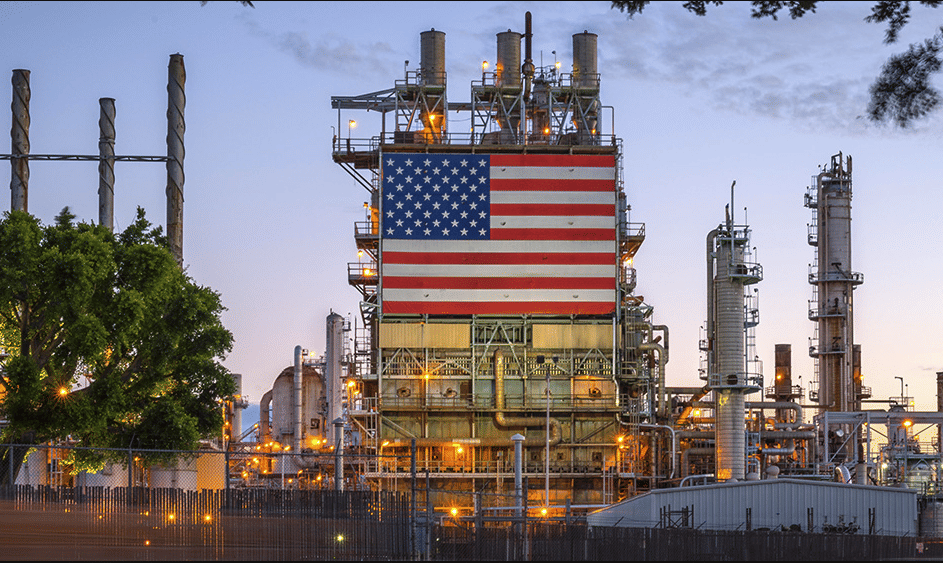
Sacramento drove out two major refineries, watched gas prices spike 40 cents in two weeks, and now CARB wants to pile on even more fees — here's what nobody in power wants you to know.
You are already paying $4.58 a gallon for gas in California. The national average is $2.92. That $1.66 gap isn't an accident. It's the predictable result of years of deliberate policy choices — and Sacramento just proposed making it worse.
Last week, energy giant Chevron sent a letter directly to Governor Gavin Newsom warning that proposed amendments to the state's Cap-and-Invest regulations could force California's remaining refineries to close and drive gas prices even higher. They're not bluffing. Two refineries are already gone. And the state's response has been to propose new operating fees on the ones still standing.
How We Got Here
California's Cap-and-Invest program — formerly known as Cap-and-Trade — was extended through 2045 last year and renamed to make it sound more investor-friendly. The California Air Resources Board (CARB) opened a public comment period on proposed amendments in January and closed it March 9th, 2026.
The new wrinkle in the proposal: refineries and other manufacturers would be required to purchase permits just to operate in California — on top of the existing fees they already pay for emissions. In other words, you pay to exist. Then you pay again if you emit. Chevron's Downstream president Andy Walz put it plainly in a letter to state leaders: the proposal "is going to make it a lot worse — it's going to drive the price of gasoline up to consumers."
That's not a talking point. Chevron estimates the policy could add more than $1 per gallon to gas prices by 2030 if carbon allowance prices rise to their projected ceiling of around $135 per ton. The California Energy Commission's own data already shows the current Cap-and-Invest program adds $0.24 per gallon. The Legislative Analyst's Office projects that number could hit 74 cents per gallon if allowance prices max out — even before the proposed new fees kick in.
The Experiment Already Failed
The state didn't need to model this. It already ran the experiment.
Phillips 66 closed its Los Angeles refinery in October 2025. Valero shut down its Benicia facility — four months ahead of its planned April 2026 closure date — in January 2026. Together, those two closures eliminated roughly 17.5% of California's in-state refining capacity, leaving the state with just six operating refineries.
Within weeks, the results were visible at every gas station in the state. California gas prices surged 40 cents in two weeks, hitting $4.58 per gallon statewide — the highest of any state in the country, topping even Hawaii.
Why did they leave? Valero cited low operating margins, mounting regulatory costs, and an $82 million fine from the Bay Area Air District — the largest penalty in the district's history. The company took a $1.1 billion write-off charge on its California operations. That's not a company trimming costs. That's a company paying nine figures to stop operating in a state.
Valero's CEO described California's regulatory environment as "the most stringent and difficult of anywhere else in North America." Chevron has already relocated its global headquarters to Houston. Phillips 66 cited long-term sustainability concerns when it shuttered its L.A. plant.
The Part Nobody's Talking About
Here's the argument CARB and Sacramento cannot answer: driving out California's refineries doesn't reduce global emissions. It just moves them somewhere else.
California requires a proprietary gasoline blend — CARBOB — that can't simply be sourced from any refinery in the world. As in-state capacity disappears, the state increasingly imports refined fuel from refineries in Asia and the Middle East, which operate under fewer environmental restrictions than California's own facilities. The emissions don't vanish. They just migrate beyond CARB's accounting.
UC Davis economists modeled this out: by August 2026, when the full market effect of the two refinery closures is realized, California gas prices could rise $1.21 per gallon above current levels — assuming no additional disruptions. USC Professor Michael Mische's more comprehensive analysis, accounting for the full regulatory burden, puts the ceiling considerably higher — potentially $8.43 per gallon by year-end 2026 under a 75% increase scenario.
The California Policy Center was more blunt: California is already operating with a supply shortfall, and there is no meaningful buffer if one of the remaining six refineries goes down for unplanned maintenance.
There's also a national security dimension that mainstream coverage continues to treat as a footnote. California hosts more than 30 U.S. military installations — Air Force bases, Army installations, and logistics hubs serving the Pacific region. Those bases rely on in-state fuel production. Republican Congressmen Vince Fong and Stan Ellis have warned directly that the closures threaten military readiness. The Newsom administration disputes this, calling it speculation. But the Department of Defense uses roughly 93 million barrels of petroleum per year, and the West Coast refining network is a load-bearing part of that supply chain.
What the State Should Do — And Won't
Senate Republican Leader Brian Jones has called for a special legislative session focused specifically on energy supply, not energy transition. His recommendations include investment tax credits for refineries and temporary relief from certain taxes and regulations. Jones sent a letter to Newsom in May 2025 warning that the governor "owns this gas crisis" and that the policies driving it out of California could become a national crisis if replicated elsewhere.
The response from Sacramento? CARB released a statement calling Cap-and-Invest "the most cost-effective way for California to achieve its statutorily mandated climate goals" and noted that the proposal is "$20 billion less costly than scenarios initially analyzed in April 2024." Senate President Pro Tempore Monique Limón suggested that the conflict in Iran proves California should accelerate its clean energy transition.
That is the argument: that Californians should pay more for gas now so that sometime in the future — 2045, according to the statute — the state reaches its climate goals. The people paying $4.58, $5.00, or $8.00 a gallon in the meantime are simply part of the transition plan.
What Needs to Change
The state isn't wrong that California's energy mix will shift over the coming decades. But there is a meaningful difference between a managed transition and a demolition job. Right now, CARB is proposing to layer new fees on an industry that is already closing facilities and writing off billions in California assets — while gas prices are already surging and the comment period on the new rules just closed.
If Sacramento were serious about affordability, it would pause the Cap-and-Invest amendments until the market has stabilized from the two refinery closures already in the books. It would fast-track permits for import terminal upgrades at the Port of Benicia and other facilities so that imported supply can actually fill the gap. And it would stop pretending that driving out California's cleanest domestic refiners is a climate win, when the replacement supply is being refined overseas under looser rules.
Instead, the board hearing on the new amendments is set for Q2 2026, with an effective date of September 1st. Mark that date. By fall, you may be feeling it every time you fill up.