
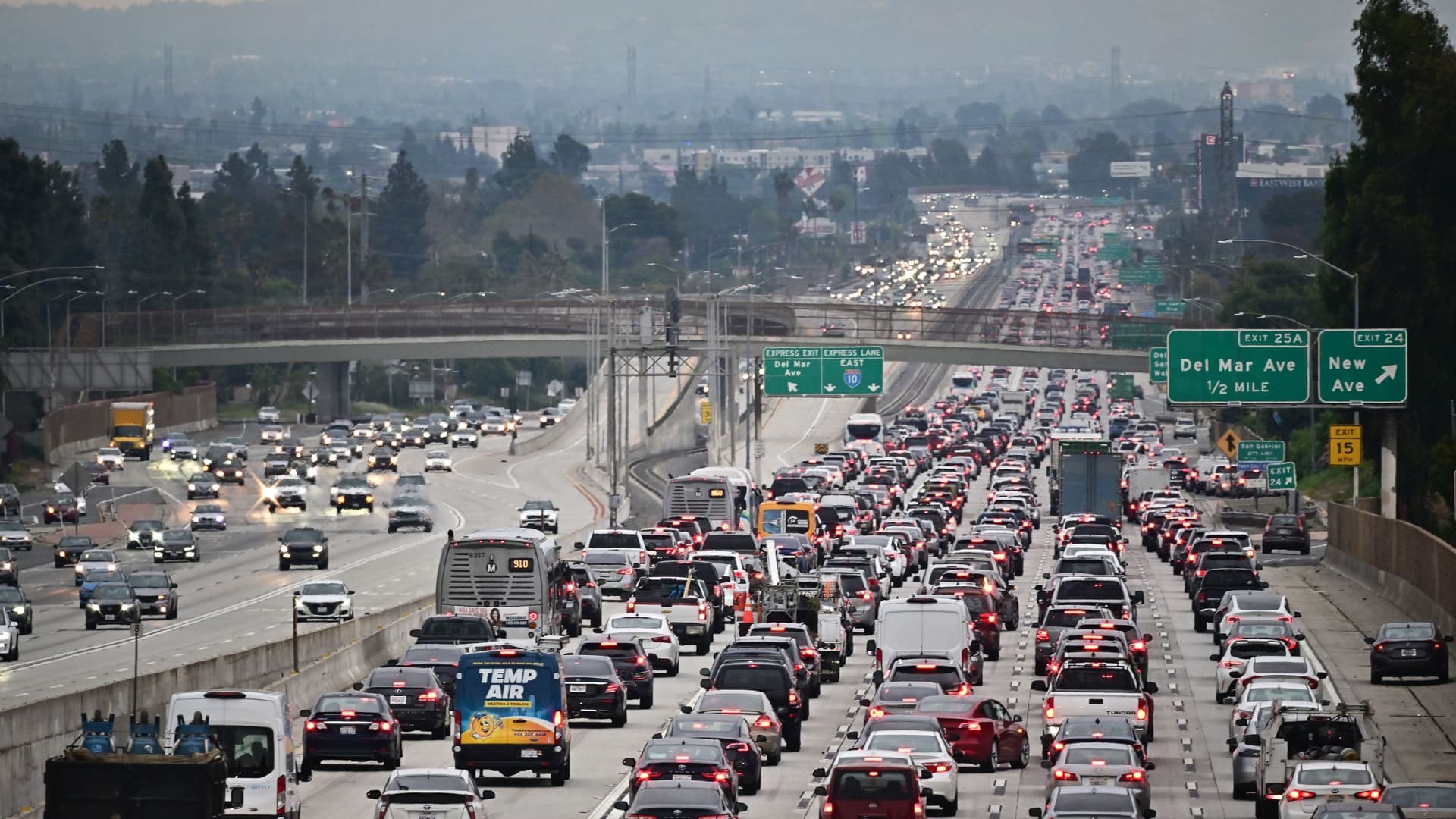
A State Addicted to Taxing Its Citizens
California’s latest scheme to fund its creaking infrastructure—a proposed mileage tax—has all the hallmarks of yet another government money grab. As Sacramento pushes its green agenda with electric vehicles (EVs) and lofty housing goals, the state’s gas tax revenue is drying up, and lawmakers are itching to plug the gap with a new levy on every mile you drive. But this so-called Vehicle Miles Traveled (VMT) tax, tucked into the fine print of Senate Bill 1 (SB 1), is raising red flags for taxpayers already squeezed by the state’s high costs. Is this really about fixing roads, or just another way to fleece Californians? Let’s dig into the details and ask the hard questions.
The Proposal: Paying for Every Mile
The VMT tax would charge drivers based on the miles they rack up, regardless of whether their car runs on gas or electricity. With EV sales soaring—nearly 20% of new cars sold in California in 2024 were electric, per the California Energy Commission—the state’s 51-cent-per-gallon gas tax, already one of the highest in the country, is projected to lose $4.4 billion annually by 2030, according to Caltrans. So, instead of tightening its belt, Sacramento wants to track your odometer and bill you for it.
How much? Nobody’s nailed it down yet, but Oregon’s pilot program charges 1.8 to 2.2 cents per mile. For the average Californian driving 12,000 miles a year, that’s $216 to $264 annually—a brand-new tax for simply getting to work or the grocery store. Rural drivers, who often have no choice but to log long miles, could get hit even harder. A 2023 UC Davis study estimates they’d pay up to 40% more than urbanites, raising serious questions about fairness. And let’s not ignore the privacy nightmare: tracking mileage could mean GPS monitoring or mandatory odometer checks. “Big Brother on my dashboard? No thanks,” one X user from Modesto posted, capturing the growing unease.
The tax is part of SB 1, which also ties funds to affordable housing and transit projects. Developers can pay into a VMT fund to support infrastructure near transit hubs, supposedly to cut emissions and sprawl. But here’s the catch: those costs—estimated at $5,000 to $10,000 per housing unit by the California Home Builders Association—will likely get passed on to homebuyers and renters. In a state where the median home price is $850,000 (Zillow, September 2025), good luck convincing anyone this won’t make housing even less affordable.
A Track Record of Mismanagement
California’s infrastructure is a mess, no question. The state ranks 43rd in highway performance and cost-effectiveness, with 14% of roads in poor condition and 7,000 bridges needing repairs, per the Reason Foundation’s 2024 Annual Highway Report. But why should taxpayers trust Sacramento with more of their money? A 2022 state audit revealed that only 65% of gas tax revenue actually went to road repairs, with the rest siphoned off for bureaucracy and pet projects. X users haven’t been shy about calling this out, with posts like “CA can’t fix potholes with the taxes they already have. Now they want more?” going viral.
The state’s push for EVs, while noble, is partly to blame. With 1.2 million electric vehicles registered by mid-2025, gas tax revenue is tanking. But instead of rethinking spending priorities—or, say, cutting bloated administrative costs—lawmakers are doubling down with a tax that punishes everyone, especially those who can’t afford to live near transit or buy a $50,000 EV. And for all the talk of “transit-oriented development,” California’s public transit systems are hardly a model of efficiency. Just ask anyone who’s waited 45 minutes for a late BART train.
The Housing Trap
The VMT tax is pitched as a two-for-one: fund infrastructure and boost affordable housing. SB 1 aims to support 2.5 million new homes by 2030, with 20% earmarked as affordable. The idea is to build near transit to reduce car use and emissions (transportation accounts for 40% of California’s greenhouse gases). But this assumes developers won’t just pass the VMT fees onto consumers, which they will. “This is a tax on housing disguised as a tax on driving,” said Dan Dunmoyer of the California Building Industry Association. In a state where rents are already sky-high and homelessness is a crisis, piling on more costs feels like a cruel irony.
And what about the promise of better transit? California’s track record here is shaky too. The state’s high-speed rail project, now over a decade behind schedule and billions over budget, is a glaring example of good intentions gone awry. Why should we believe the VMT tax will deliver where other schemes have failed?
A Skeptical Look Forward
Proponents, including Governor Newsom’s administration, insist the VMT tax is a “fair” way to fund infrastructure in an EV-driven future. But fairness is hard to see when rural drivers, low-income commuters, and aspiring homeowners are the ones footing the bill. Alternative ideas—like hiking EV registration fees or taxing charging station electricity—have been floated, but they’re no less intrusive. A 2026 pilot program will test the VMT tax, but full rollout could take years, and public trust is already thin.
California’s infrastructure needs fixing, no doubt. But throwing another tax at a state already drowning in high costs—gas, housing, groceries—feels like a lazy cop-out. Lawmakers need to prove they can manage the money they already have before asking for more. Until then, the mileage tax looks like just another way to squeeze taxpayers while promising results that may never come.